
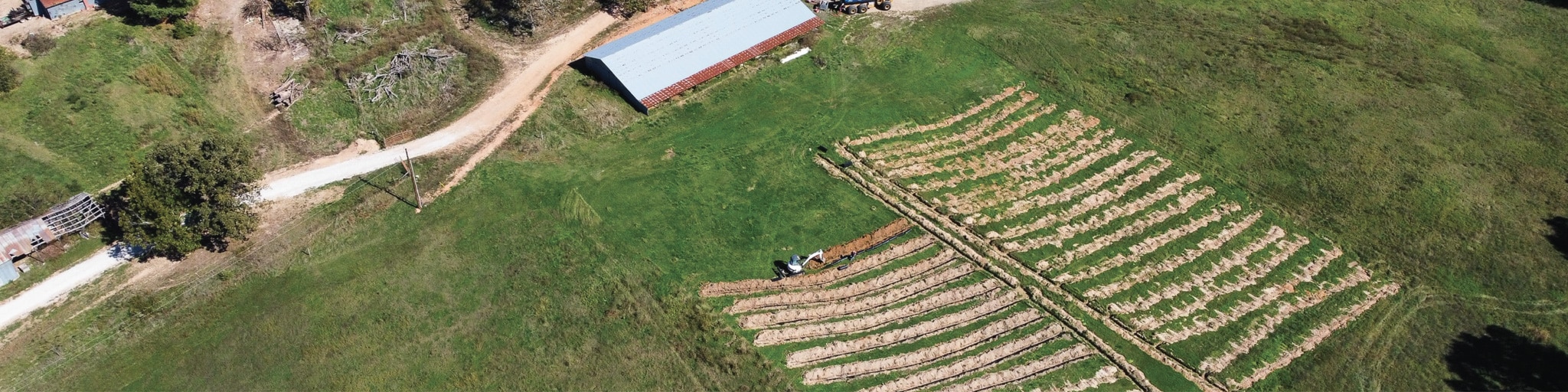
At Cleanwater Farm, we’ve built a process that takes waste from trucks, processes it, and returns it safely to the ground. Sometimes as solids, sometimes as water, and sometimes as something completely new.
It begins with collection. Waste is taken from portable toilets and septic tanks.
Next comes logistics: Even the best separation system is useless if trucks are stuck in lines. We’ve set up multiple strategically-placed depots in the areas we serve with practical access, isolated enough to avoid neighbors and NIMBY, and permitted for safe processing.
From there, we dump our trucks into our patented vibratory screen to take the trash and debris out, resulting in easily transferable blackwater.
That wastewater is stored until our bulk hauler picks it up and takes it to the Cleanwater Farm.
The Cleanwater Farm begins the process of treatment. Some is treated with natural additives, and then the blackwater that has been treated is land applied to fields for agricultural production. If it’s not land applied, then it is held in our 40,000 gallon tank. Those tanks are pumped and blended with polymer.
Following this is the dewatering process. The solids and water are separated with our rotating cylinder before being directed into an underground absorption area. The result is drier solids that are easier to handle.
These solids from the dewatering are processed into biochar.
That’s three different revenue streams from just the process of collecting wastewater to seeing it safely returned to the environment in a clean, green way. This process solves all the problems of traditional methods, which can take a long time to dump, clog easily, and demand constant manual attention.
Trucks can come and go with minimal delay. Storage areas handle variations in volume or weather, so operations keep moving even when rain, frost, or municipal restrictions would otherwise create a bottleneck.
This approach allows us to handle volumes that would otherwise strain municipal systems, eliminate unnecessary labor, and create a workflow that operates year-round.
Cleanwater Farm is the effort of years of trial, error, discussions, trial, error, and incremental improvement.
Onsite wastewater doesn’t have to be chaotic or inefficient.
Read the next post: Differences in Dewatering: Some are better than others